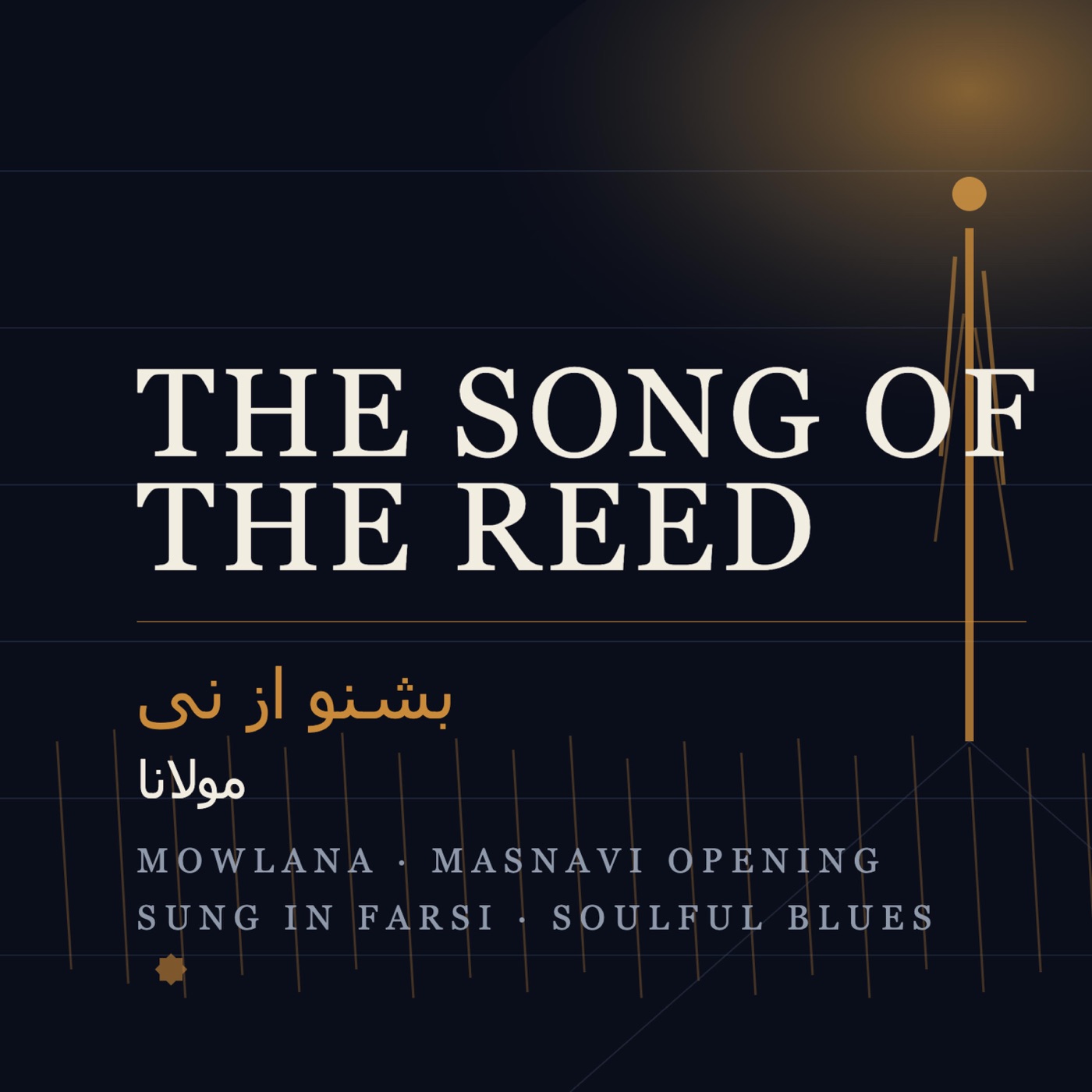
The Song of the Reed
- Poet:
- Mowlana (Rumi)
- Era:
- 13th century
- Soulful Contemplative Blues
Music & vocals AI-generated · poem in the public domain
The poem
بشنو از نی چون حکایت میکند
از جداییها شکایت میکند
کز نیستان تا مرا ببریدهاند
از نفیرم مرد و زن نالیدهاند
Ney-nameh (The Song of the Reed) · Masnavi-ye Ma'navi, Book One — opening lines
About the poem
The opening of Mowlana's Masnavi — the reed torn from the reed-bed, wailing its separation. Every listener hears their own longing in its cry.
Meaning & background
«بشنو از نی چون حکایت میکند» — “Listen to the reed, how it tells a tale” — opens the Ney-nameh, the first eighteen lines of Mowlana's Masnavi-ye Ma'navi and perhaps the most famous opening in all of Persian literature. The reed flute, cut from the reed-bed, is the human soul: severed from its divine origin, it turns the wound of separation into music, and every listener recognises their own longing in its cry.
For Mowlana (13th century), the ney is the perfect image of the seeker — hollow, emptied of self, able to sing only because it has been cut. This session sets those opening Persian lines to slow soulful blues, letting two traditions of lament — the Sufi reed and the blue note — speak to each other.
Tradition treats the Ney-nameh — usually counted as the Masnavi's first eighteen bayts — as the essence of the whole work: Mowlana's preface calls the Masnavi “the roots of the roots of the roots of the Faith,” and commentators have long said that whoever truly hears the reed's complaint holds the key to the remaining twenty-five thousand couplets. Through Nicholson's translation and its successors, “Listen to the reed” became one of the most recognized openings in world literature — and the ney itself is still the voice of Sufi music, from the Mevlevi sama to this session's blues.
Listen