About This Work
Published in MDPI Sensors 2025
DOI: 10.3390/s25072024
Towards AI-Powered Applications: The Development of a Personalised LLM for HRI and HCI introduces a groundbreaking Personalised Large Language Model (PLLM) framework that achieves real-time adaptation to user emotions in both Human-Robot Interaction (HRI) and Human-Computer Interaction (HCI). The PLLM integrates EEG-based emotion recognition with advanced dialogue generation, enabling context-aware and emotion-sensitive responses tailored to individual users.
Innovation
This is the first demonstration of real-time EEG-driven personalisation in LLM-based dialogue systems, opening new frontiers in neuroadaptive AI.
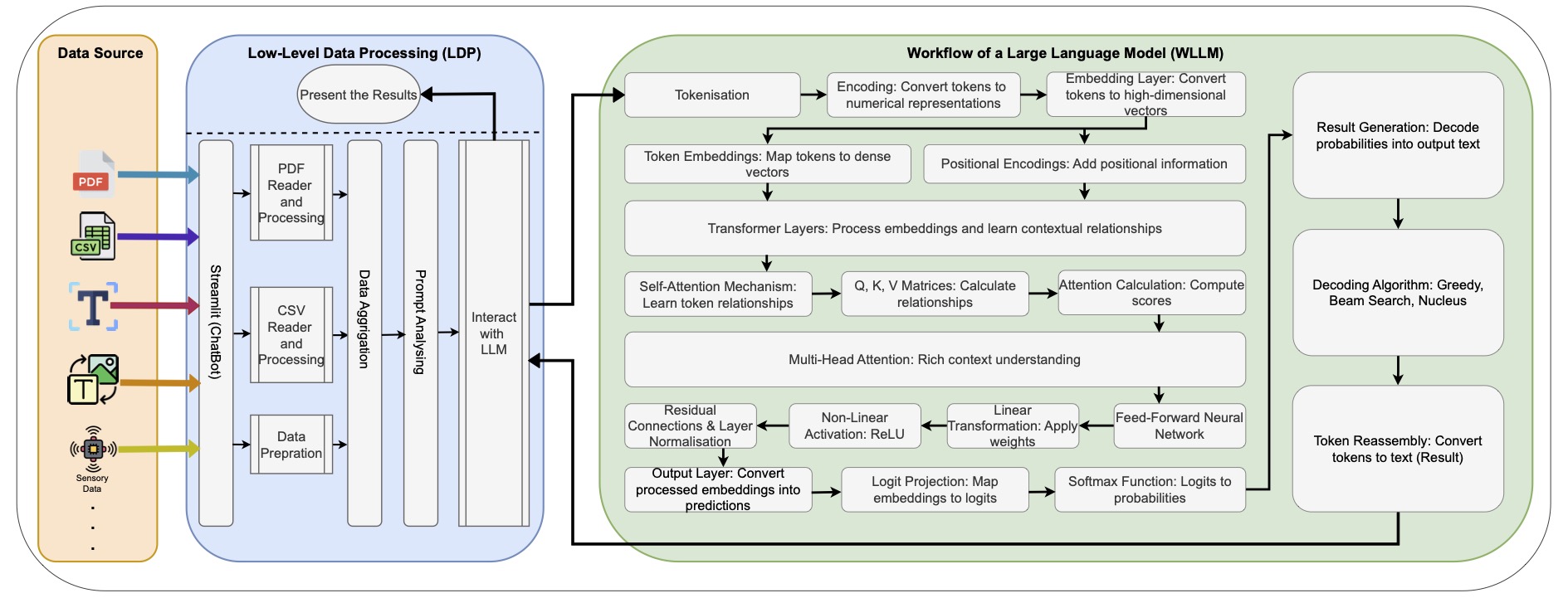
Framework Architecture & Methodology
The PLLM system represents a paradigm shift in adaptive AI, combining neuroscience with cutting-edge language models to create truly personalised interactions. Our framework consists of three integrated components working in seamless harmony:
Core Components
Technical Achievement
The system processes EEG signals and generates contextually appropriate responses within milliseconds, demonstrating the feasibility of real-time neuroadaptive AI.
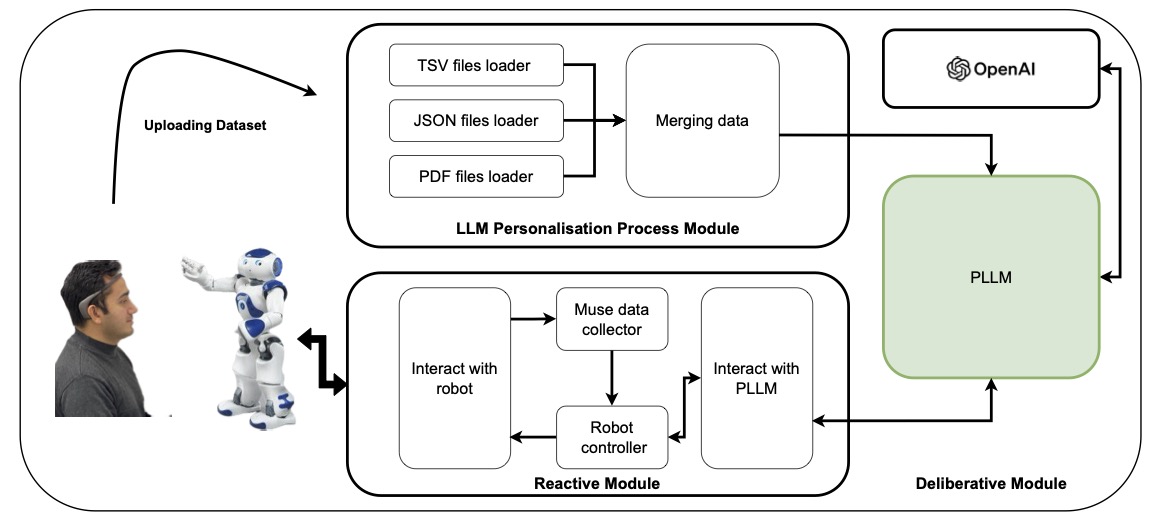
Experimental Results & Validation
Our comprehensive evaluation using the NeuroSense dataset demonstrates the effectiveness of emotion-driven personalisation in AI dialogue systems. The results establish new benchmarks for neuroadaptive human-computer interaction:
Key Findings
- High-Accuracy Emotion Detection: The EEG-based emotion recognition module achieves robust performance in real-time classification across multiple emotional states.
- Enhanced Dialogue Quality: Emotion-conditioned prompts significantly improve the relevance, appropriateness, and user satisfaction compared to baseline language models.
- User Engagement Metrics: Subjective evaluations reveal substantially increased engagement and perceived intelligence during emotion-adaptive interactions.
- Real-World Feasibility: The Streamlit deployment demonstrates practical applicability for research and commercial applications.
Impact
This work establishes the foundational framework for next-generation neuroadaptive AI systems, with applications spanning healthcare, education, entertainment, and assistive technologies.
Scientific Contribution & Novelty
Our research addresses a critical gap in adaptive AI systems by introducing the first practical framework for EEG-driven LLM personalisation. This work contributes to multiple domains:
Research Contributions
Future Implications
This work paves the way for emotionally intelligent AI assistants, therapeutic robots, and adaptive learning systems that respond to users' mental states in real-time.
Open Science & Collaboration
We are committed to advancing open, reproducible science in neuroadaptive AI. This research provides a foundation for collaborative development of more sophisticated emotion-aware systems and welcomes partnerships to extend these capabilities.
Full Paper & Code Access
The article is published under the CC BY 4.0 license, ensuring open access for the research community.